Wishes for the Lunar New Year (Seollal)
Lunar New Year
You may have heard phrases like "Chinese New Year" or "lunar calendar"—these are not traditions common to cultures in our region - be it European, Slavic or more generally, Western. However, measuring time according to the cycles of the moon is a well-known idea in regions that have been influenced by the Chinese civilization for thousands of years, such as Korea, Japan, Vietnam, etc. It is there, among other places, that the Lunar New Year is widely celebrated.
But what does it mean? Lunar New Year is, like the New Year's Day, the first day of the first month of the new year. The only difference is that it refers to a lunar year, aligned with the phases of the moon (its beginning usually falls on the first new moon after the winter solstice). This year is actually shorter than the solar year on which our calendars are based. Therefore, the Lunar New Year is a movable holiday, usually falling at the turn of January and February - but the exact dates can vary greatly.
A key element of each lunar year is its assigned zodiac sign. The Chinese zodiac includes 12 animal signs, and one sign lasts an entire year. Furthermore, each sign is assigned one of the five elements (often interchangeable with colors). One can see combinations such as "metal/white snake," "earth/yellow tiger," or "fire/red horse," the latter being the sign of 2026. Each animal sign has its own history and symbolism, just like the elements mentioned above - we recommend delving further into this topic if this short post caught your interest.
In Korea
While in China it's a large holiday that lasts about two weeks (most shops are closed during this time), in Korea it's a public holiday for 2-3 days. Many people use their vacation time to extend the holiday celebrations or take a trip abroad.
Seollal - as "Lunar New Year" is called in Korean (설날) - is a time for Koreans to return to their hometowns to meet with loved ones, prepare and eat traditional dishes, and try their hand at traditional games. Below are some of the most important elements of this holiday's celebration:
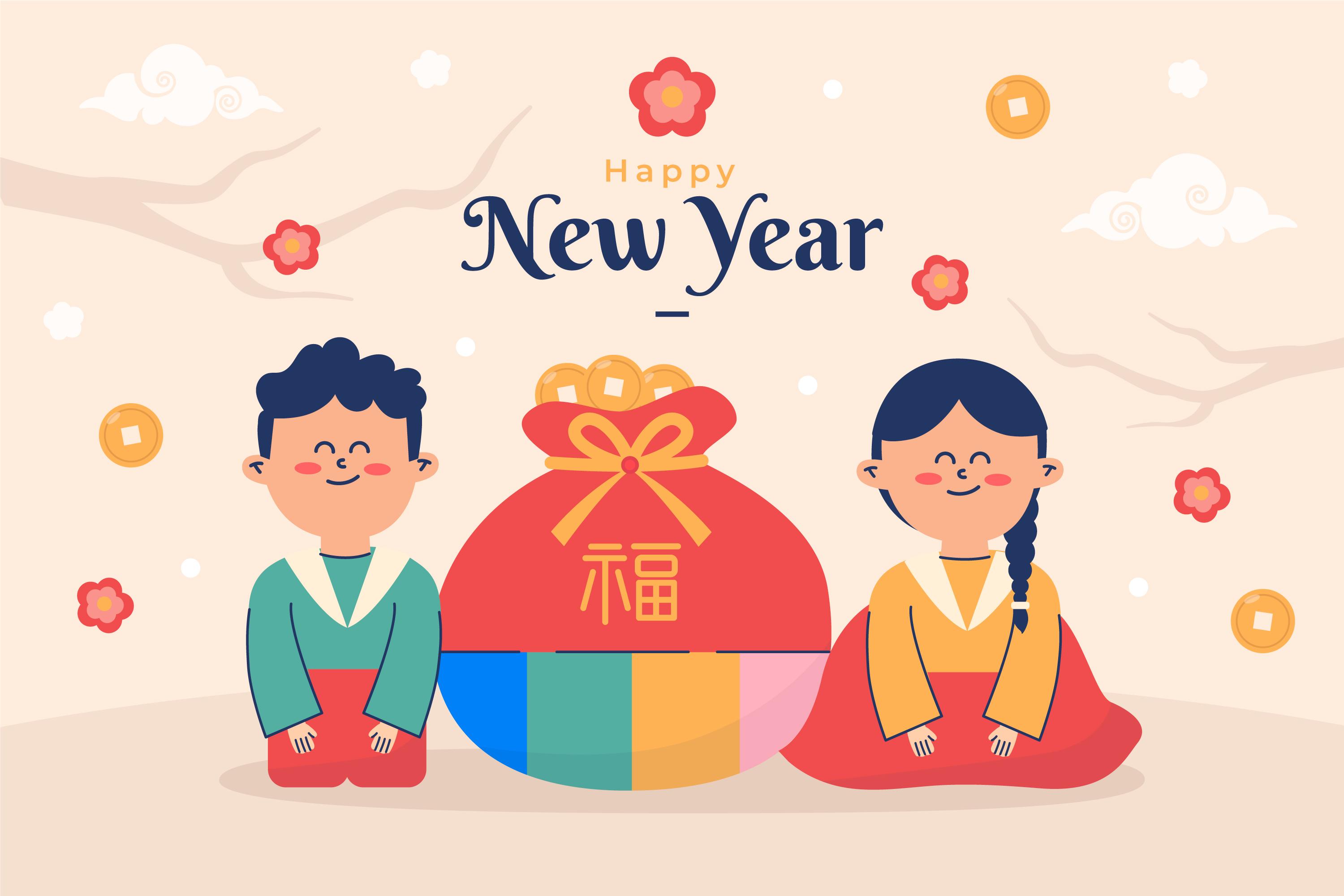
- sebae (세배) - special New Year's bows performed by younger members of the family to their elders,
- sebaetdon (세뱃돈) - New Year's money given to younger members by older members after bowing,
- seolbim (설빔) - festive attire for the first day of the year,
- tteokguk (떡국) - a soup eaten on the first day of the year. Tteok (떡) rice dumplings shaped like coins float in the soup, and they are believed to bring prosperity for the year. It's said that after eating tteokguk, one becomes a year older,
- bokjumeoni (복주머니) - literally "lucky pouch," is a decorative pouch with a Chinese character for good luck,
- yunnori (윷놀이) - a traditional Korean game similar to "Ludo", but instead of dice, sticks, which have patterns on one side and are blank on the other, are used,
- yeonnalligi (연날리기) - a traditional Korean game related to kite flying.
Of course, there are many more games and dishes - just like various Christmas traditions.
All the best!
Finally, we would like to wish you all the best in the Lunar New Year. According to general fortune tips, this is the perfect year to implement bold changes in your life, but ones that are carefully planned, not spontaneous.
In Korean, the most common wishes for this occasion are:
새해 복 많이 받으세요.
(English pronunciation: Sae-hae bong ma-ni ba-deu-se-yo), meaning "please receive much happiness in the New Year."
| Published on: | Feb 13, 2026, noon |
| Updated: | Mar 9, 2026, 4:16 p.m. |
Last update on March 9, 2026, 4:16 p.m.


Follow us